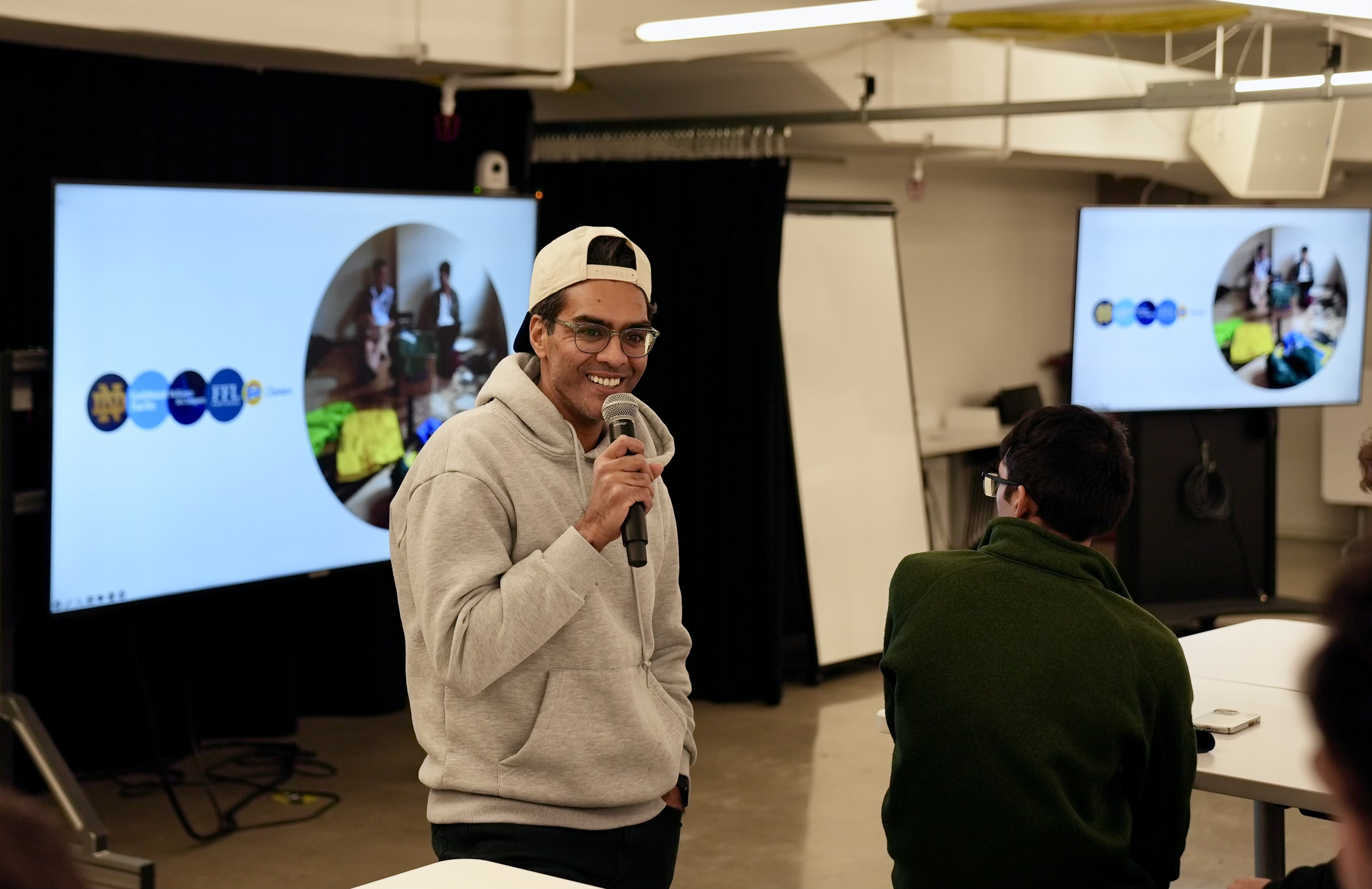
When Vijen Patel told his family he was leaving a stable career in private equity to start a dry cleaning company, the response was uneasy at best. “My mom cried,” he told Residents at The Garage’s Family Dinner on Tuesday night.
Looking back, it was that same idea, the one that felt risky and unpopular at the time, that would make Patel a founder, later the CEO of Tide Cleaners, and eventually the founding partner of a new investment firm focused on so-called “boring” industries.
“I had a very traditional career path,” Patel told Residents. “Worked at Goldman, then worked at McKinsey. I did that in New York, London and South Africa, and then I finally made my way to the west coast.”
On paper, the trajectory made sense. In practice, it did not.
“It just felt inauthentic. We were sitting in these incredible board rooms and judging these operators, but I was a 27-year-old. I thought, ‘What advice do I have to give to a CEO?’” Patel said. “I felt like I needed to go learn.”
What kept pulling at him, Patel said, was “the itch to build.” As he began thinking seriously about entrepreneurship, he developed a framework for spotting opportunities that others ignored, one that he shared with the student founders.
“Pay attention to these three things: if there were verticals [in consumer-facing markets] that had a lot of fragmentation, a lack of technology, or no prominent leaders,” he told the room. “It usually signaled disruption.”
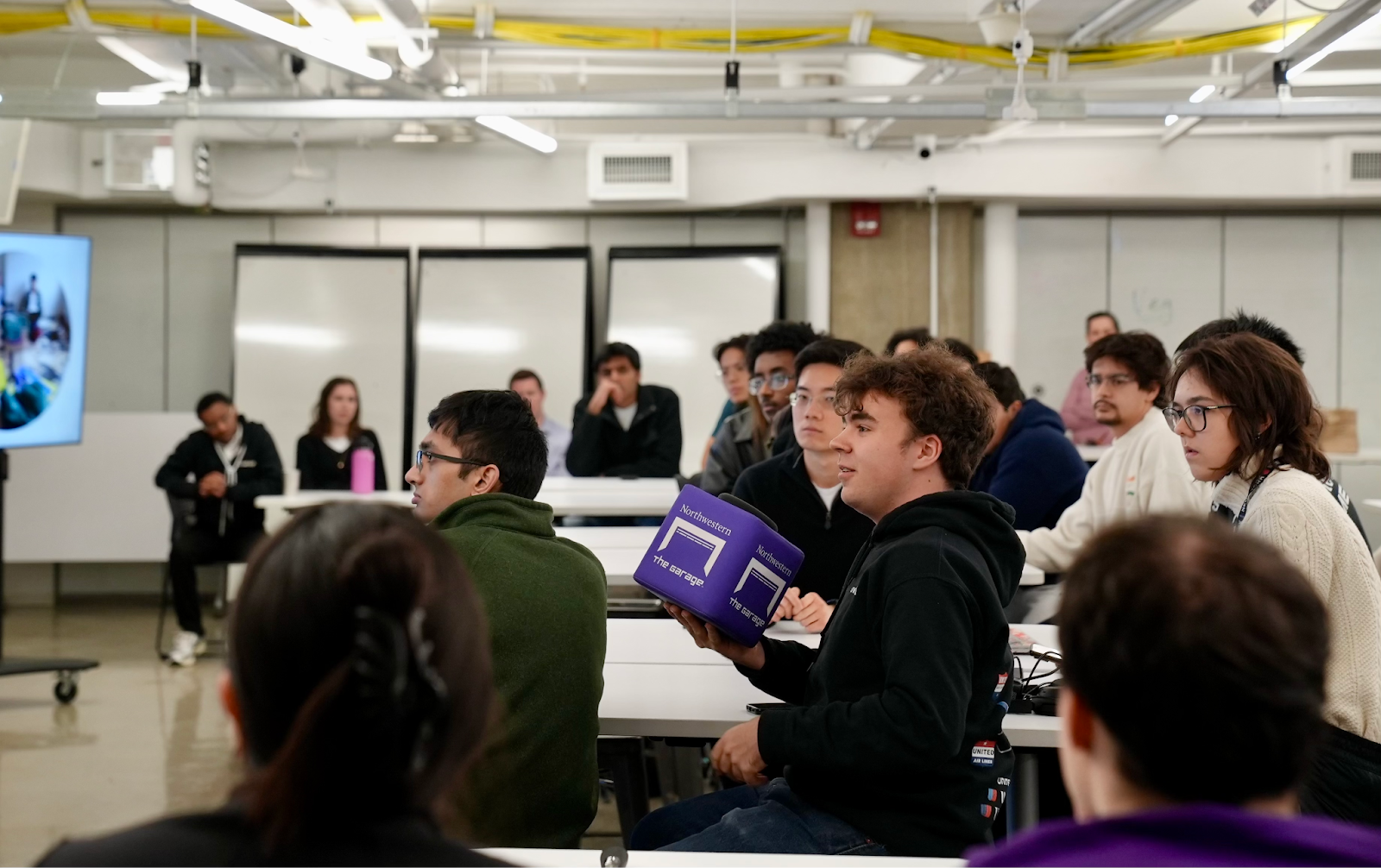
Students in the audiences offered up the car wash, taxi, and similar industries as examples. Patel saw the same dynamics in dry cleaning, an idea that eventually blossomed into his co-founding of Pressbox in 2013.
“Dry cleaning is fragmented, behind in technology, and has no leadership,” Patel said.
He explained that most storefronts were simply intermediaries, shuttling clothes back and forth to centralized facilities. Pressbox allowed customers to drop off laundry at any time using secure lockers, primarily located in high-rise apartment buildings, and track their orders digitally.
Before building anything, Patel did something many founders instinctively avoid: he shared his early stage idea with as many people as possible.
“I cannot recommend more to tell your ideas to any and everyone,” Patel said. “The best thing they’ll do is tell you why you’re stupid. And that’s exactly what we did.”
Rather than dismissing that skepticism, Patel said the early reception directly shaped the business. For example, one concern surfaced repeatedly in conversation: people liked the in-person dry cleaning experience because it allowed them to communicate specific preferences, such as pointing out stains.
Their solution? Implementing sticker rolls, notecards, and even adding a personalized touch to early orders.
“We, crazily, wrote a handwritten note with every first order,” Patel said. “The reason that mattered is we considered how unhuman it is to drop your favorite sweater or the suit that you wore to a wedding into a locker and all of a sudden assume trust.”
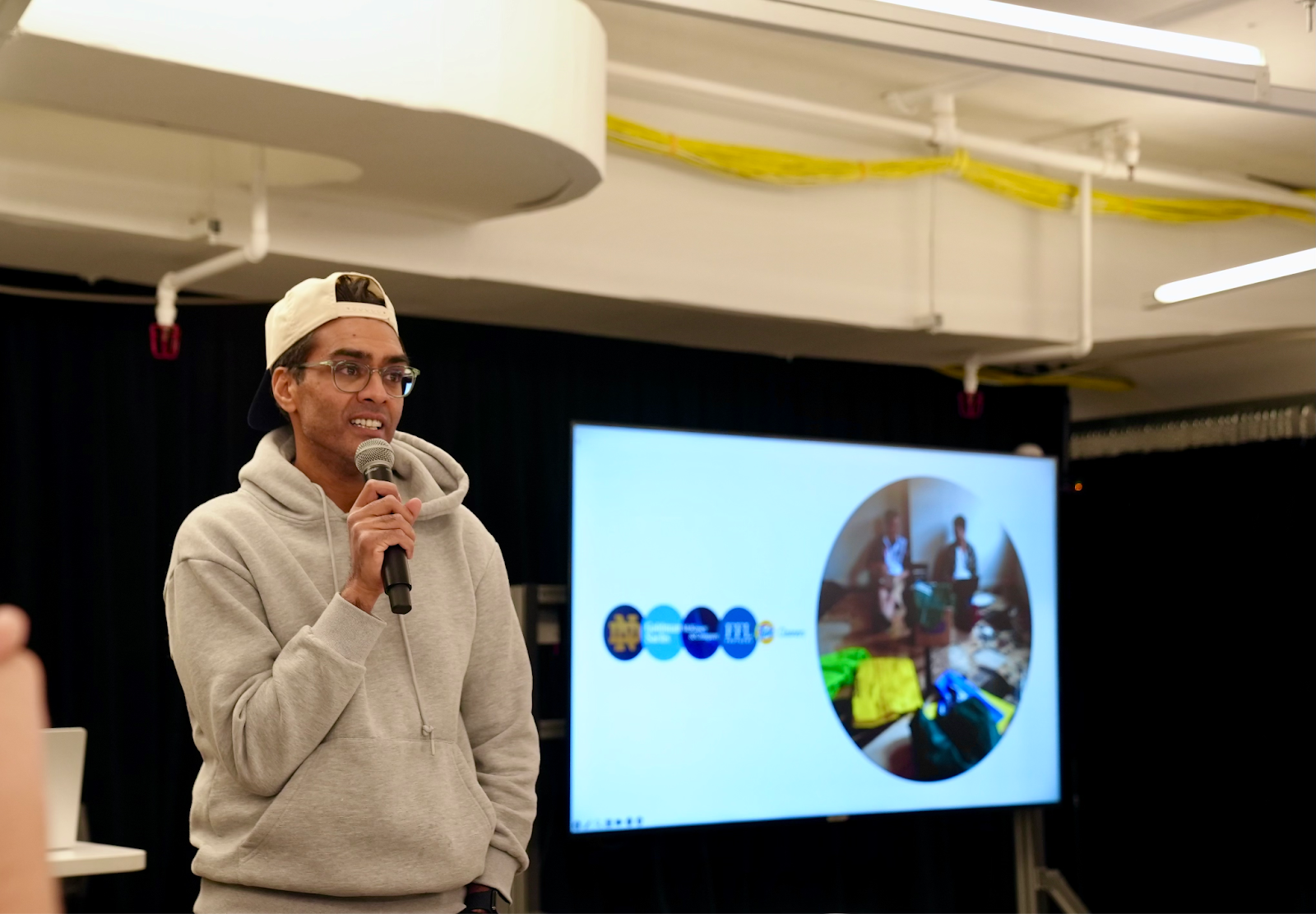
Pressbox grew without venture capital, a decision Patel described as “the best blessing we ever had,” because it meant every dollar spent had to earn its return. By 2018, the company had grown to 1,200 locations across 10 states, leading to its acquisition by Procter & Gamble. Patel stayed on for two years as CEO of Tide Cleaners, overseeing further national expansion.
Reflecting on that journey, Patel shared with students a few lessons he wished he had internalized sooner. One was that it is very hard to do great things when you’re so busy.
“The idea of confusing activity and progress,” Patel said, was a common trap. “If I look back at the 10 biggest defining moments in my life, they weren’t time, they were step changes.”
Patel highlighted one Pressbox employee in particular, describing a shirt presser so skilled that while most people could handle around 20 shirts an hour, and many employees reached 30, she could press 55. He explained how her role expanded alongside the company’s growth to now eventually leading an entire manufacturing facility. For Patel, stories like that became a lasting measure of impact beyond revenue or exits.
Today, Patel applies those lessons as founder of The 81 Collection, an investment firm that backs founders building in overlooked, “unsexy” industries. He framed the work as both economic and social.
“If we lift these industries, not only do you create these good businesses,” Patel said, “but I actually think you can start to rebuild the middle class in our country. That’s really the underlying purpose.”
To close, Patel returned to the instinct that first pushed him off the safe path.
“It has been the greatest journey of my life to start a company. Don’t get me wrong – it was so scary. But I wouldn’t trade it for anything in the world,” Patel told Residents. “You all have the entrepreneurial itch. Go itch it. It’s the greatest thing you’ll ever do.”

About the Author Nadia Bidarian ’26 is a Journalism, Data Science, and Cognitive Science student from Redondo Beach, California. She is a student aide at The Garage who works on alumni programming, events, and other projects for The Garage.

2311 Campus Drive Suite 2300
Evanston, IL 60208
.png)