Eight million people watched Mike Shannon shake Mark Cuban’s hand on national television at age 23. Less than twenty four hours later, he was back at work in the Chicago Bulls laundry room.
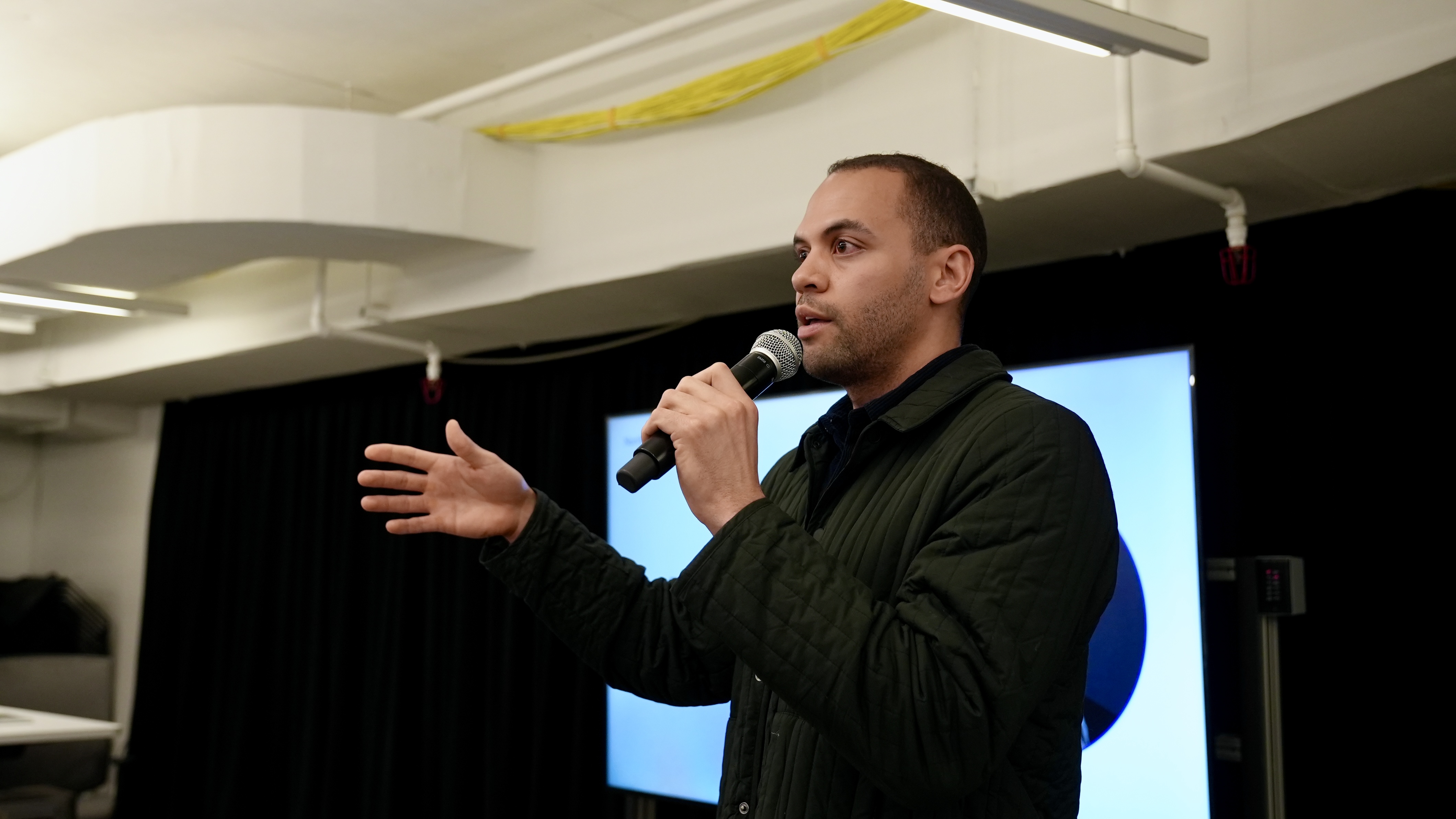
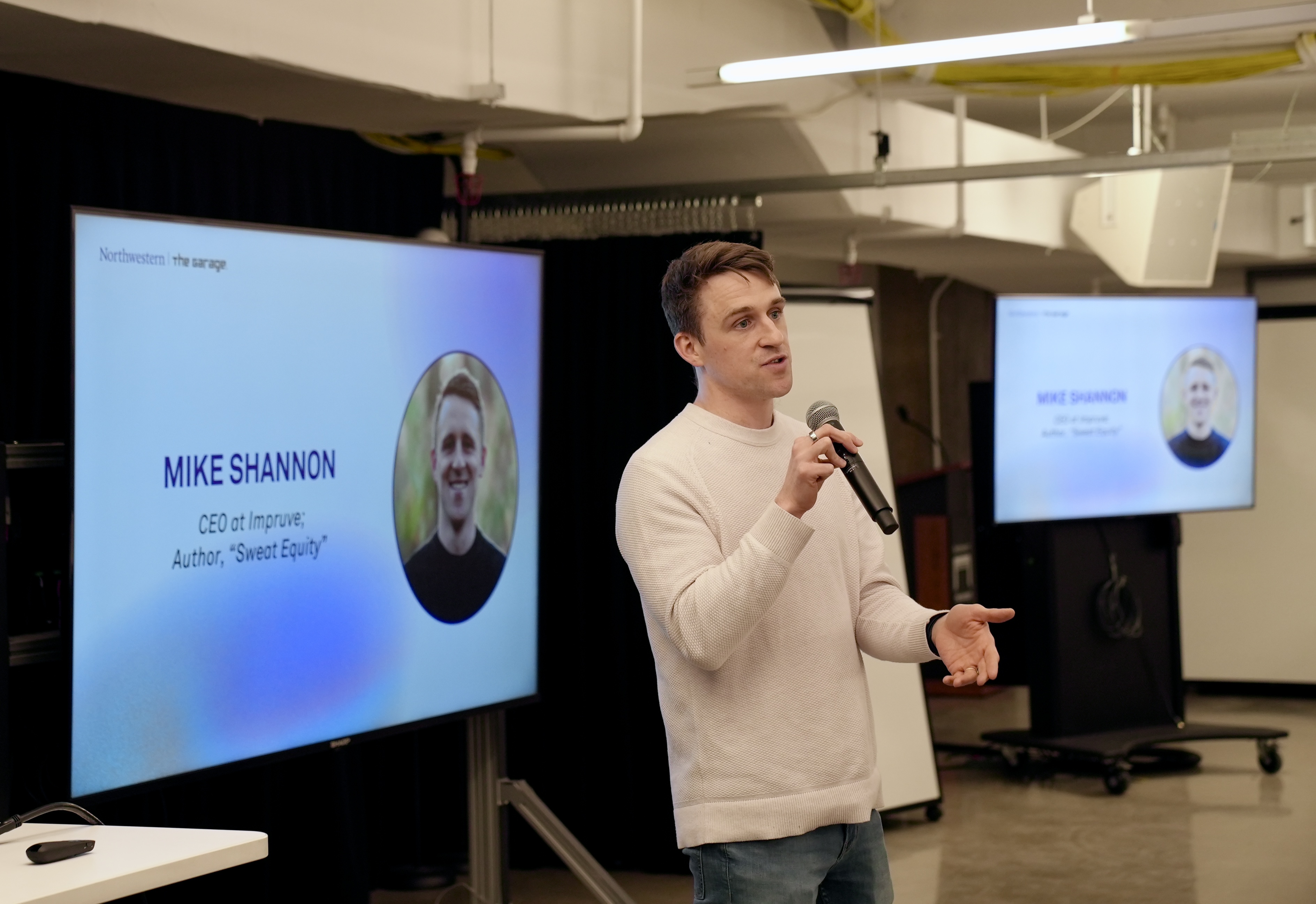
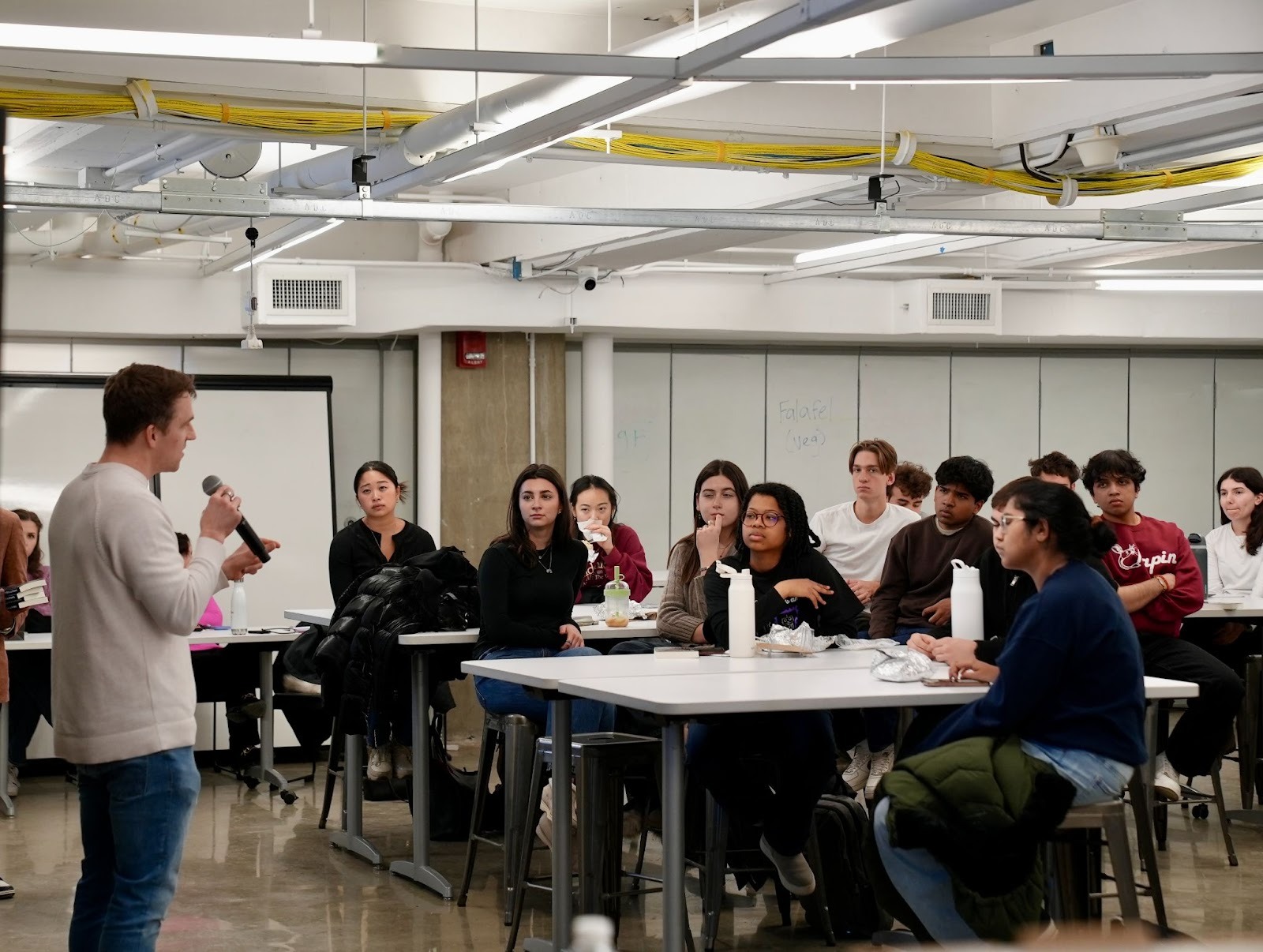
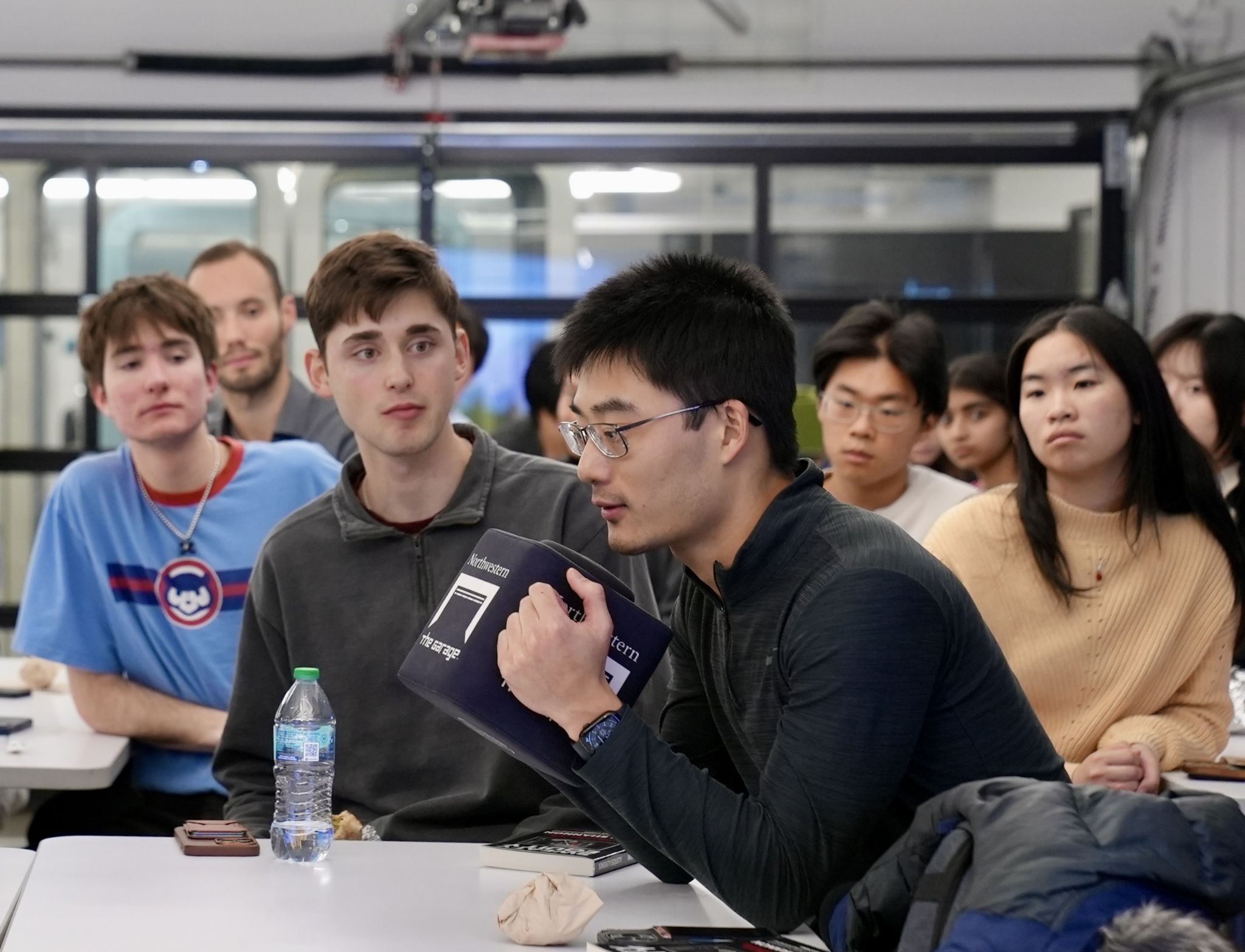
“An email goes out org-wide that a ball boy’s been on Shark Tank. I get invited up to the front office, some NBA players invest – awesome stuff is happening,” Shannon told an audience of student founders at Family Dinner on Wednesday night. “And then everything that could go wrong goes wrong.”
Shannon’s winding founder story was the focus not just of his talk at The Garage, but also of a book he wrote chronicling the experience. “Sweaty Equity” traces Shannon’s double life building a startup while working seven seasons as a ball boy for the Bulls.
“The whole concept [of the book] was to try to put in a bottle the real survival mode moments through a startup journey,” Shannon explained.
Today, Shannon is the CEO and co-founder of Impruve, an AI steward for wealth management firms. Before launching Impruve, Shannon co-founded Packback, which started as a digital textbook rental business, while still a student at Illinois State University.
The company attracted a myriad of angel investors following their appearance on Shark Tank. But what followed was anything but smooth sailing.
“All of a sudden you’re young and it feels like this weight is on your shoulders,” Shannon told Residents.
Behind the scenes, the company struggled to secure licensing rights from textbook publishers, calling its original model into question.
“I thought, Holy cow, this thing’s not actually working. Are we going to lose one hundred people’s money?”
Rather than shutting down, Packback shifted its focus. What began as a solution tied to textbooks ultimately became a standalone discussion platform used in large classrooms and named as one of Fast Company’s 10 Most Innovative Companies in Education.
More than a decade after its founding, Packback reached the $20 million annual revenue mark and exited in 2024. Mike promoted an internal CEO successor and began working on Impruve with his brother, Danny Shannon, a longtime software engineer. During the Q & A, one student asked Shannon: how did he find motivation to start again?
“‘Michael Jordan’s got a great quote: I’ve never lost a game. I just ran out of time,’” Shannon recounted. “In theory, if I can operate my discovery engine with a healthy enough cost structure, I’m never going to lose. I might just run out of time and decide to stop playing the game. That’s how I think about it.”
During the discussion, Shannon offered concrete advice to student founders, particularly around building relationships long before asking for anything in return.
Rather than waiting until a raise or a crisis, he encouraged students to ask for permission early to keep potential mentors and investors in the loop.
“If I met somebody, the minimum ask is ‘can I keep you on our Friends of Fill-in-the-Blank-Company update?’ Almost nobody is going to tell a Northwestern student entrepreneur with this great ambition that no, I don’t even want to be updated,” Shannon said.
Consistency, he added, matters more than perfection.
“The reason you have to do it consistently is I’m only reading one of three of those. I know my inbox is a mess, even though I want to read all your updates,” Shannon said. “The founders that do that, I do think they are the ones who get the check.”
For the student founders in the room, Shannon’s story made clear that how you show up can ultimately matter more than where you land.
In particular, one angel investor later told Shannon that his habit of frequent, honest updates had quietly won him a game he hadn’t even realized he was playing: The integrity game.
“Let’s say you do an idea – you ask for $10 million and it goes to zero. If you won the integrity game, all kinds of opportunities, be it your next startup or your next job, will open up,” Shannon said. “There are ways to not have to think of this as a huge risk of failure. It’s just different versions of wins.”

Nadia Bidarian ’26 is a Journalism, Data Science, and Cognitive Science student from Redondo Beach, California. She is a student aide at The Garage who works on alumni programming, events, and other projects for The Garage.

2311 Campus Drive Suite 2300
Evanston, IL 60208
.png)