For Northwestern alum Scott Tsangeos, founding the startup Olympus has been an odyssey.
Olympus is designed as software for personal trainers and team coaches to digitize handwritten workout statistics and monitor growth. The startup reached a record number of sales last week and is currently negotiating a deal that would significantly expand Olympus's network of partner schools.
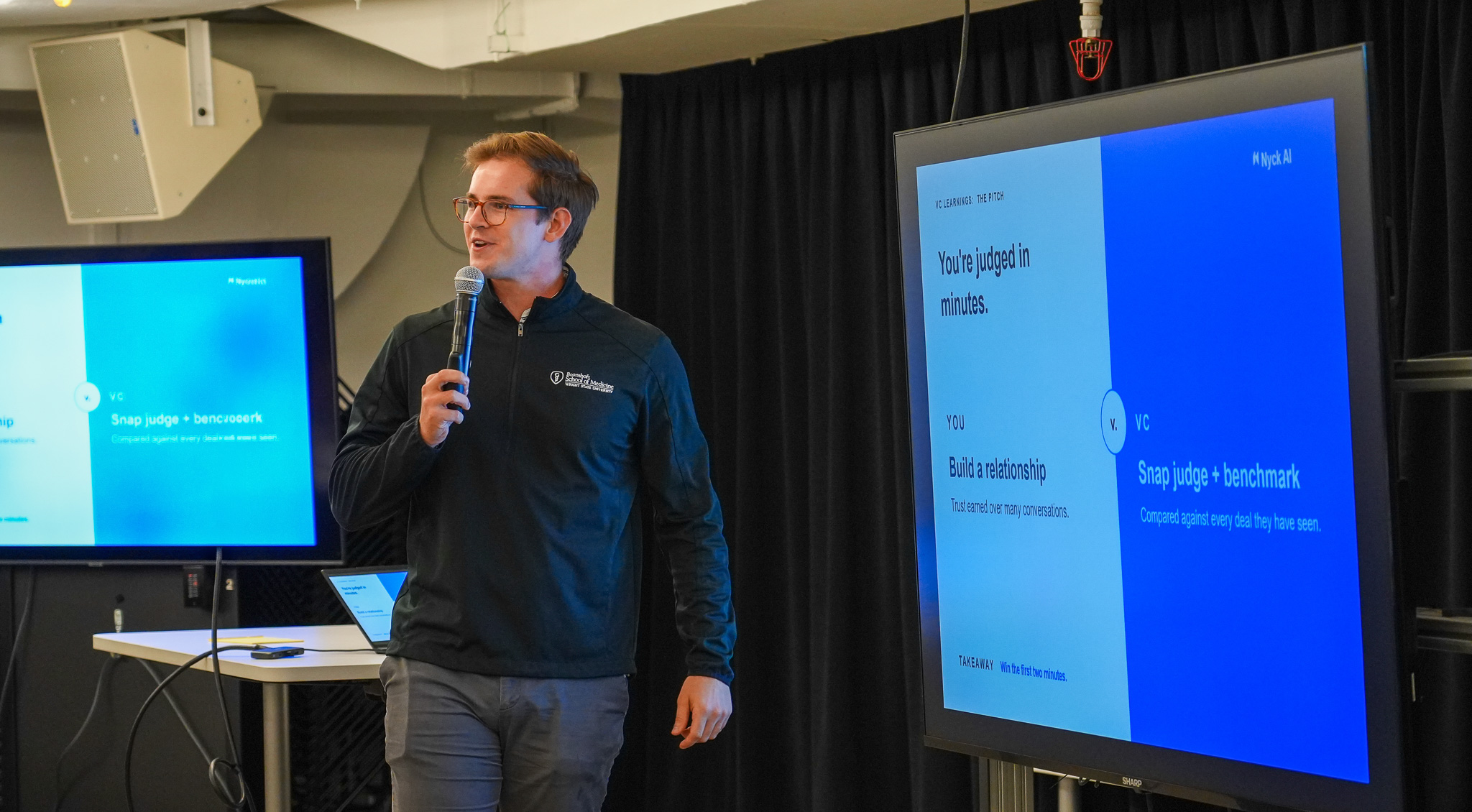
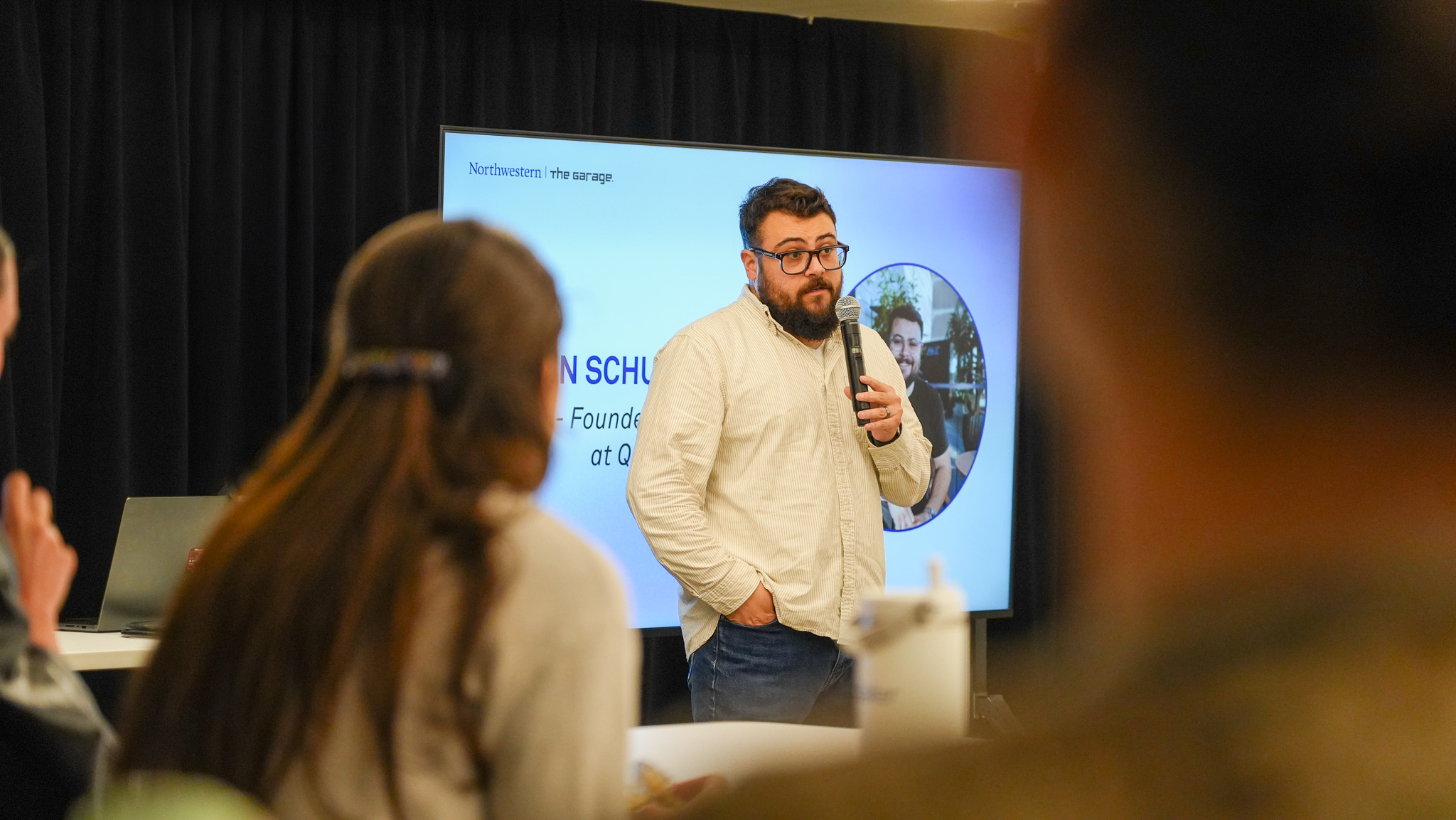
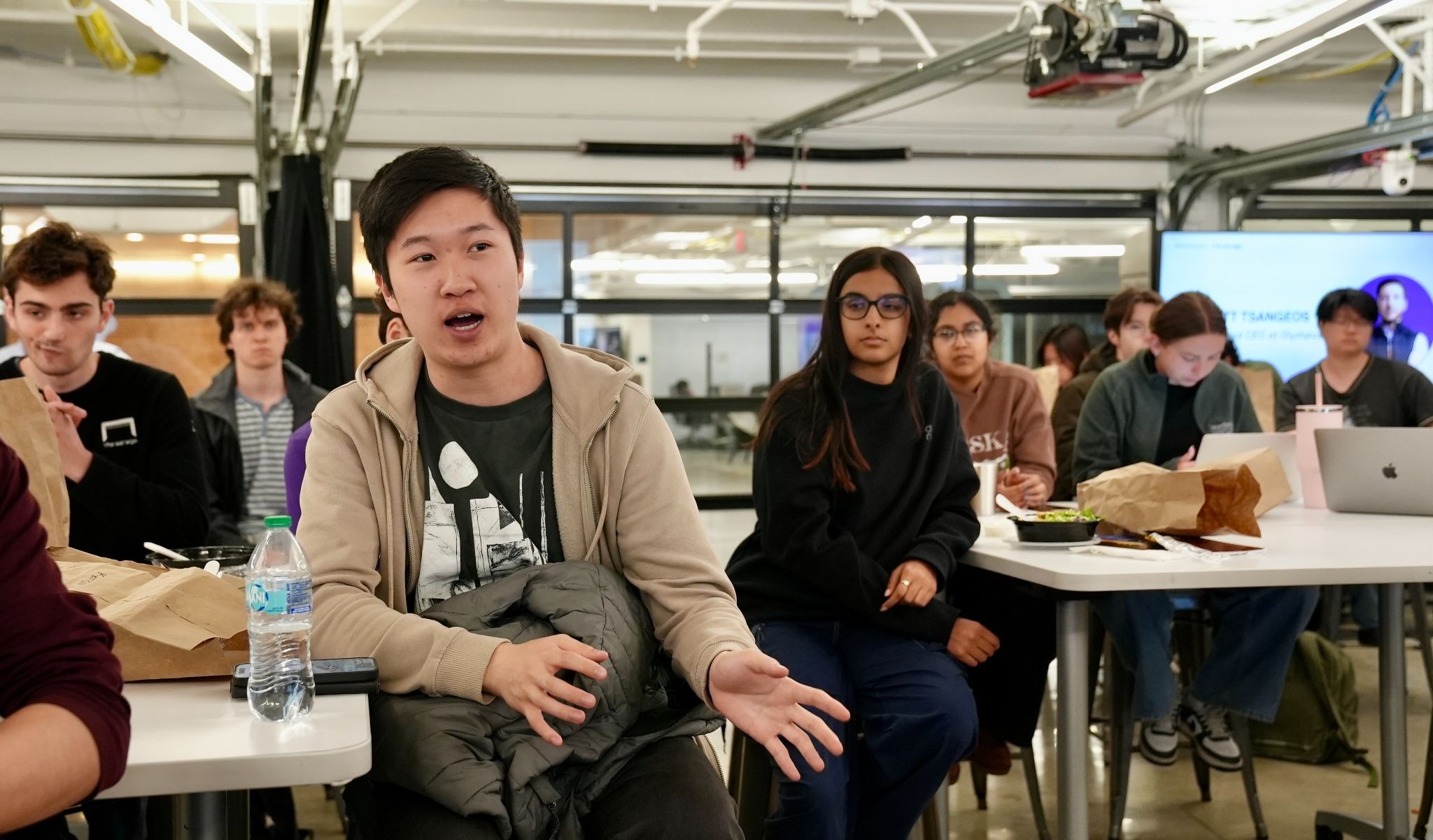
Tsangeos returned to The Garage on April 28 to speak to Residents about what he learned by creating his venture.
“We want to make it easy for student athletes and athletes everywhere to collect data, to see it, to analyze it, and then use that to make decisions to improve their progress,” Tsangeos said. “The other part of the mission is with community. We think that a huge part of improvement is having the support of your coaches, your peers and your teammates.”
Tsangeos, who graduated from the Kellogg School of Management in 2024, is a former resident of The Garage, VentureCat emcee and Jumpstart participant. Last February, Tsangeos received $100,000 in investment from NUseeds to grow Olympus.
Although the company now sells directly to businesses—coaches, trainers, teams and schools—the original Olympus prototype was intended as a way for consumers to record and share personal records and workouts. The company pivoted towards the end of Tsangeos’ time at Northwestern in order to scale more effectively.
“We made a great product. It's still alive and exists, but we did not build a business, and that's a very important distinction,” Tsangeos said.
In a “last-ditch effort” that saved Olympus, Tsangeos reached out to Northwestern’s Strength and Conditioning Program and asked them directly what kind of product would solve their problems best. Tsangeos then built a prototype of their ideal product, a system to convert print workout cards to visualizable metrics.
“They loved it. They used it for two years to help us refine it and build it,” Tsangeos said. “We instantly saw traction.”
Don’t let perfectionism keep you from opportunity
Tsangeos’ first piece of advice for founders was to avoid the trap of perfectionism. Instead of obsessing over every detail in hopes of creating a flawless first prototype, he said, it’s best for founders to release an imperfect product into the world and make adjustments based on the feedback they receive.
“Your product sucks. My product sucks. It still sucks when I look at it. There's so much more that we could do,” Tsangeos said. “We just have to get it out there. Use that feedback and steer the ship.”
For Tsangeos, overcoming his instinct toward perfectionism was crucial in pivoting Olympus.
“The best thing I ever did was show a half-baked product to a customer because they told me exactly what they want and what they don't like,” Tsangeos said.
AI will reshape entrepreneurship
In regards to the future of entrepreneurship, Tsangeos said that generative AI has made the technical aspects of product development more accessible.
“Unless you're building for space or some really deep tech, anything that you make, someone else could prompt engineer in probably an afternoon,” Tsangeos said.
Given how new technology will enable competitors with similar ideas to build, the best way to get ahead is by succeeding in distribution, Tsangeos said.
“They say first-time founders obsess over products and second-time founders stress over distribution,” Tsangeos said. “I'm gonna cheat and say that I had two products, so I've now learned that distribution is the answer.”
Love the grind, not the industry
Tsangeos’ third pointer is that founders must enjoy the intensive day-to-day work that startups require—simply caring about their product is not enough.
Tsangeos shared how he initially founded Olympus because he was passionate about the fitness industry. When his original product failed to turn a profit, his desire to make his startup work outweighed his attachment to the direction he was taking.
Tsangeos is willing to take the business to the market where it will be most successful, even if it means sacrificing the fitness focus that he was originally drawn to. If his technology could be better utilized in law firms, for example, he said he’d make the switch “in a heartbeat.”
“If you just love the industry, you will plateau,” Tsangeos said. “You have to love the grind.”
Entrepreneurship isn’t always “sexy”
Most people only see the engaging, dynamic aspects of entrepreneurship: LinkedIn, startup competitions, speaking events. However, the bulk of being a founder is far less glamorous, Tsangeos said.
Tsangeos estimates that he spends about 40% of his time selling his product, allotting two hours per day for cold-calling potential customers. 30% of his day is spent supporting customers by visiting schools and answering communications. 20% is product enhancement, and only the last 10% is the exciting, visible events that people associate with being a founder.
There are no silver bullets
For his final piece of advice, Tsangeos cautioned that founders will be tempted to seek out silver bullets, expecting that a new customer, a new feature or new development will finally fix the company.
Success, Tsangeos argued, comes from steady development, not sharp changes.
“I've never seen it ever happen, ever, that there is a single thing out there that is going to take your business to the moon,” Tsangeos said. “It’s about constant iterations and stacking wins, little by little.”
Photos by Nadia Bidarian

Allie Deutsch ‘29 is a journalism and political science major from McLean, Virginia. As a student marketing aide, she assists with event coverage and operations for The Garage.

2311 Campus Drive Suite 2300
Evanston, IL 60208
.png)