.jpg)
Tina Hrabak has sat across from hundreds of founders. As a venture capitalist at Chicago-based pre-seed fund LongJump, she knows within minutes what separates a fundable founder from one who isn't ready.
At The Garage's Family Dinner on Wednesday, she shared that perspective directly with students in the Residency program, who are already running their own startups, and Tinker program students still in the ideation phase.
Her talk, framed around "10 Things I Wish Every Founder Knew Before They Fundraise,” pulled no punches. Students left with the following four key takeaways, among others:
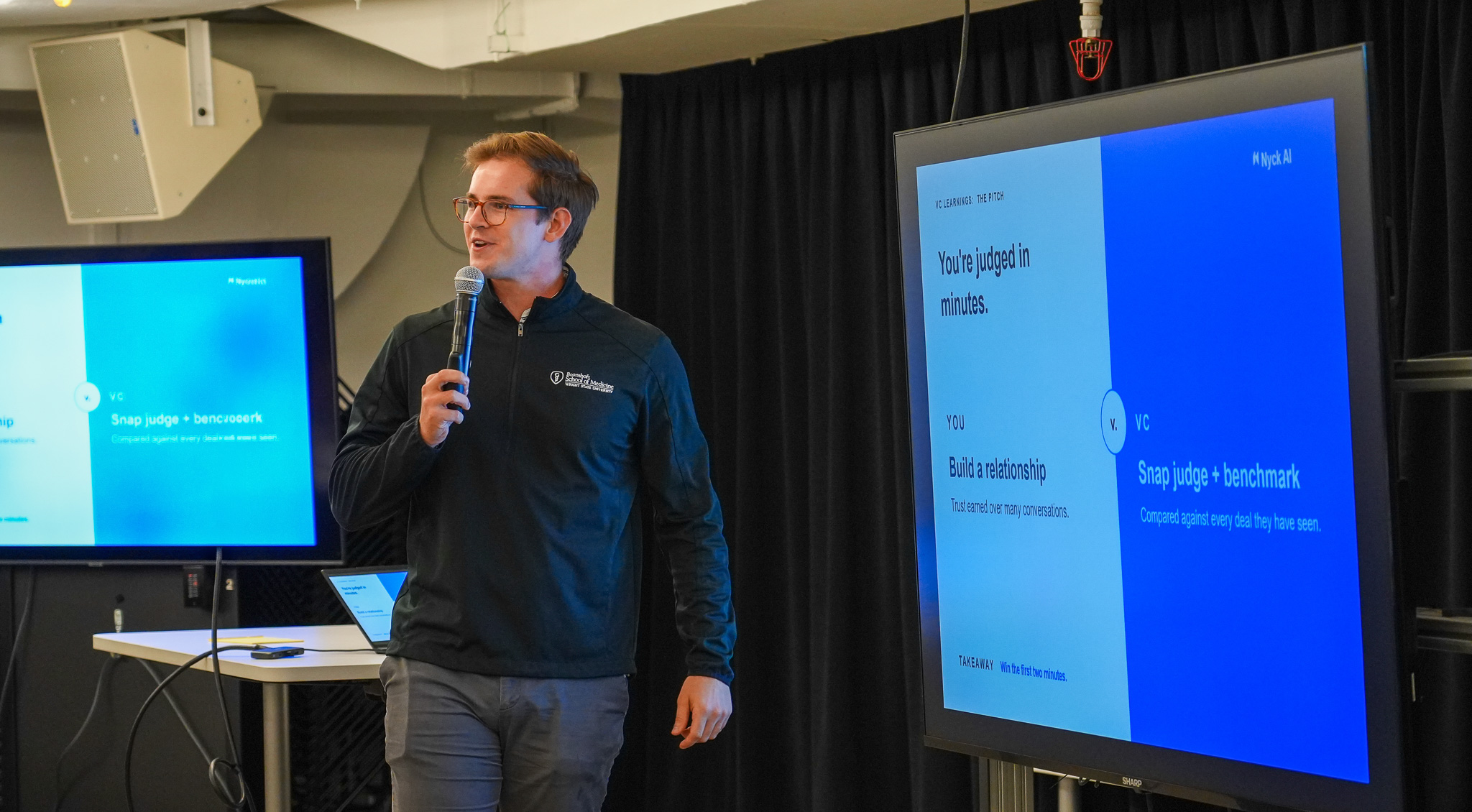
Most first-time founders, Hrabak noted, treat their pitch deck as a visual crutch for live presentations. However, investors use it for a much different purpose.
After a first meeting, investors routinely forward decks internally without the founder present to narrate them, meaning the deck must carry the full story on its own. Investors scrolling through a DocSend link spend an average of one and a half to two minutes on a deck, reading headers first and body copy only if something catches their eye.
“A lot of times I see student slide decks with titles that say ‘Problem’ or ‘Go-to-Market Slide,’” Hrabak said. “Instead, I really encourage you to use your slide titles to tell your story.”

Fundraising without a clear process is one of the most common and costly mistakes Hrabak sees. In the Midwest, a typical pre-seed process runs three to six months, longer than the two-week raises founders often read about in TechCrunch.
“Unless you’re the hottest company on Earth, you’re probably going to need 100 to 300 investors on your outreach list,” Hrabak said. “You’re going to get a ton of no’s, so it’s worth collecting those names in a Google Sheet or an Airtable and using that as a CRM to keep track of your investors.”
Timing matters more than founders realize, according to Hrabak.
"If you are not able to raise a round within six to eight months, investors are going to think you have no momentum in your round, and you're not going to be able to close that round," Hrabak said.
A complete fundraising package goes well beyond the deck.
Hrabak advised students to prepare a forwardable email blurb and a self-written investment memo ahead of a round. For the data room, she recommended gathering whatever supporting materials are available, whether that's cap table documents, customer testimonials, letters of intent, or legal docs, and have it all ready to send.
She also pointed students to a resource: Bessemer Venture Partners has published its own internal investment memos from the early 2000s on companies like Yelp and LinkedIn, offering a rare look into how investors evaluate companies at the earliest stages.
"A founder that has all of this packaged already and can immediately get it back to an investor while they're in process just shows the level of finesse that we want to be able to work with," Hrabak said.
Pie charts splitting a budget between "marketing" and "team" do not answer the question investors are actually asking: what milestone does this check get you to?
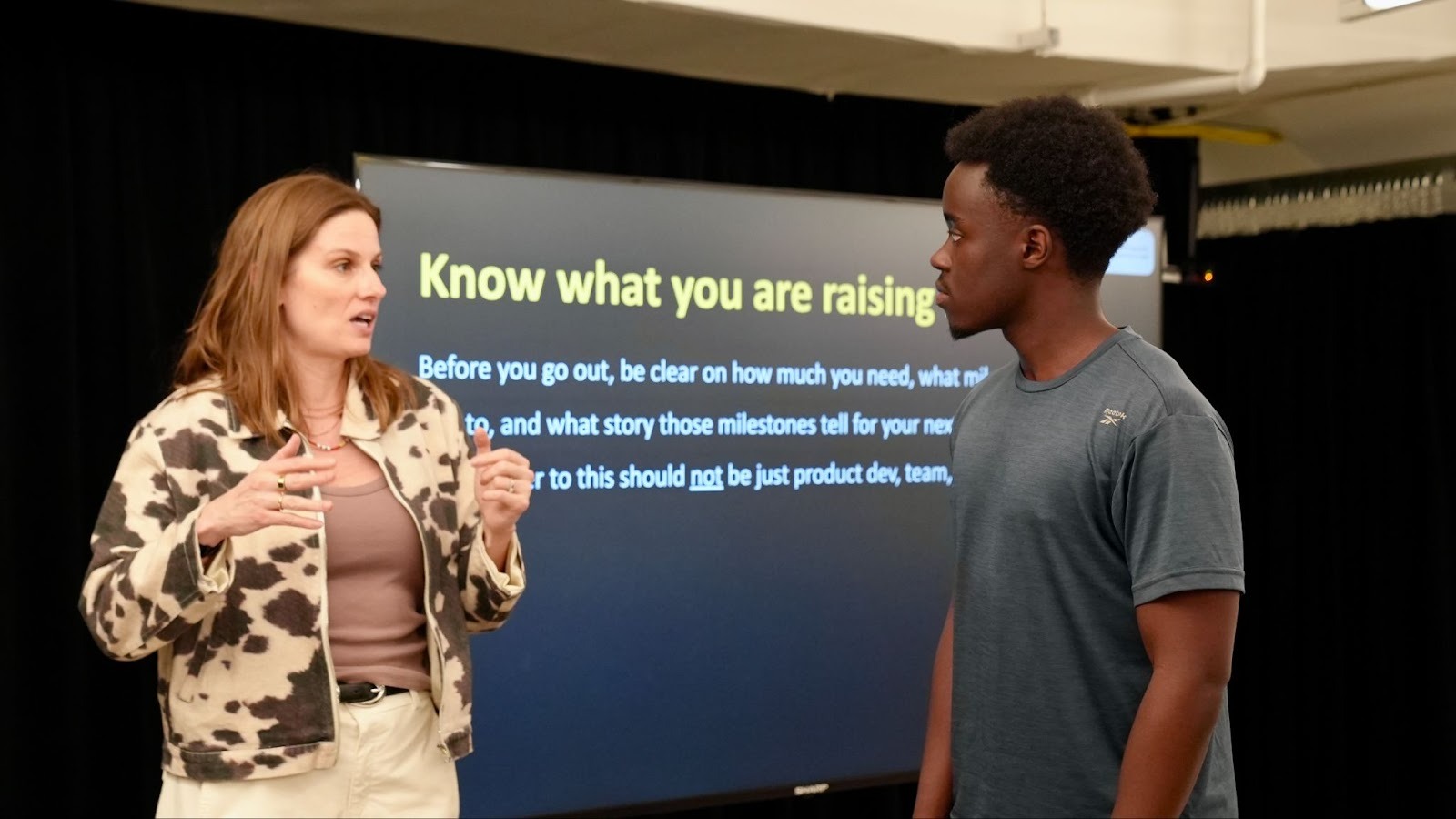
LongJump reviews roughly 250 companies before writing a single check, and the founders who connect their raise to a concrete vision stand out among the rest.
Hrabak offered a model for how founders should frame it: "I'm raising a $500,000 pre-seed round that's going to get us 18 months of runway, and we're really going to double down on a go-to-market strategy around conferences. We anticipate this is going to get us into XYZ market, get our first $500,000 in revenue by the end of 2027, and at that point, we're going to go out and raise a $2 million seed round."
The thread running through all four lessons is that investors at the pre-seed level are evaluating the founder as much as the business. Founders are often selling investors on a future vision of their company, and conviction comes from watching how founders move.
"The number one thing you can do is have momentum behind your business,” Hrabak said. “At our early stage, having that speed to execution – whether it’s building or selling, your two chief jobs as an early stage entrepreneur – is what we want to see.”

Nadia Bidarian ’26 is a Journalism, Data Science, and Cognitive Science student from Redondo Beach, California. She is a student aide at The Garage who works on alumni programming, events, and other projects for The Garage.

2311 Campus Drive Suite 2300
Evanston, IL 60208
.png)